Core Values of Humankind
This article discusses some of the universal values that almost everyone can agree are essential to the human condition and human existence.
WHAT ARE CORE VALUES?
Today, we live in a thriving world of over eight billion people, with fewer casualties of war, less poverty, and longer and healthier lives than ever before in recorded history. Technology and medical breakthroughs continue to press forward, along with global commerce and communications.
But this progress is possible only because of humanity’s common values. And it is good only when we stick to those values. We value medicine only when we value life. Commerce benefits everyone only when people keep their word. Technology is beneficial only when we use it to build a kinder, fairer world with greater freedom and opportunities for all. And global communications is of value only when we want to share our ideas and collaborate with one another.
Here are some examples of values that contribute to a better world:
HUMAN LIFE
It’s a very big world, and yet no two people are alike. No two people think alike, look alike or live the same life. Yet adult or child, man or woman, rich or poor, capable or handicapped, a member of your tribe or a foreigner—each human being is invaluable, each in his or her unique, irreplaceable way. The life of each person is sacred.
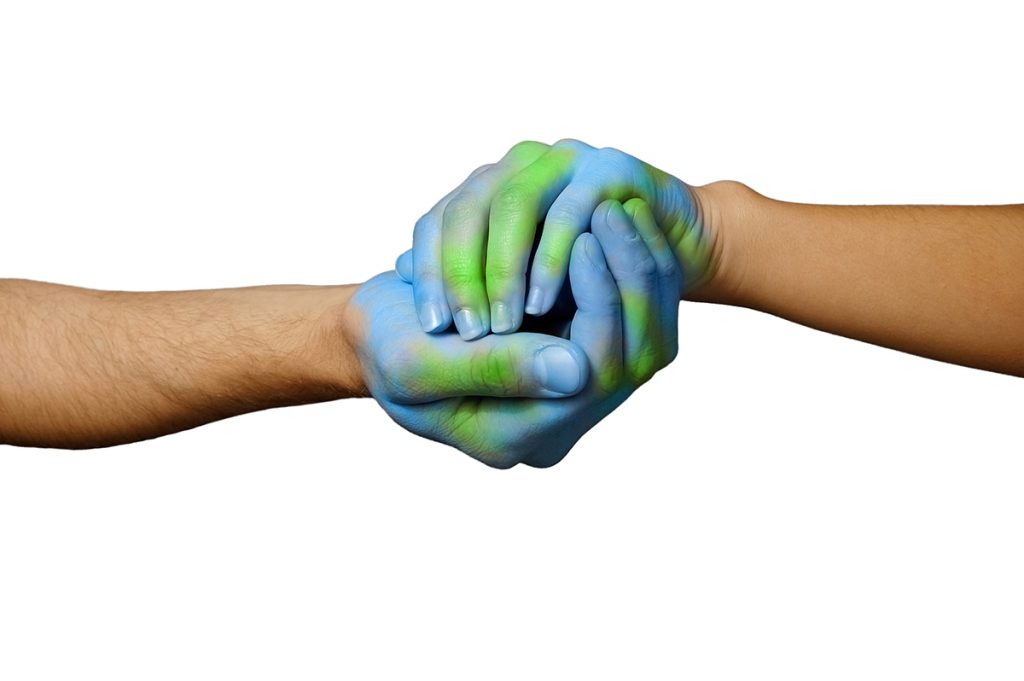
HUMAN DIGNITY
For much of the 20th century, world powers were locked in struggle. It was not just a struggle for power; it was a struggle of ideologies.
On the one side were those who believed that the good of the state overrides the rights of the individual. A person could be stripped of all he had, and entire communities could be exterminated if that benefited the state.
On the other side were those who believed in the right of every person to life, to justice, to ownership of property, and to decide how and where to live.
The experiment of the 20th century has shown clearly that protecting the rights of the individual is indeed the only way that society is sustainable.
SOCIAL JUSTICE
We know in our souls that the world is Intended to run justly. The prophet Isaiah writes that mankind should seek: “to loosen all the bonds that bind men unfairly, to let the oppressed go free, to break every yoke. Share your bread with the hungry; take the homeless into your home. Clothe the naked when you see him, do not turn away from people in need.”
FIXING UP THE WORLD
Can human beings make the world a better place?
For most of history, wise people laughed at this notion. Many considered this world a dark and cursed place. No one imagined that we could make permanent and lasting change. Everything, they said, goes in cycles. Sometimes good prevails, sometimes evil.
But humans have always been working towards an era of peace and wisdom here on earth. It is the duty of every person to leave the world behind better than he or she found it. All of us, in our actions, are builders of a better world in the future.
DIVERSITY AND THE GLOBAL COMMUNITY
In the 16th century, Europe was torn by wars of religious intolerance. People thought that those who disagreed with their beliefs were heretics and must be converted or killed. It wasn’t until they looked back into knowledge from previous eras that they realized this is not the way. Peace is only possible when we accept and appreciate each other’s differences.
A HIGHER POWER
Human nature and human reason are not inherently evil. Human beings naturally care for one another and are outraged by injustice. Human reason has produced a wealth of wisdom. But the human mind is easily bribed. When morality becomes inconvenient, we find ways to dismiss it. When ethics get in our way, we find reasons to change the rules of the game. And when it comes to people who are outside of our clan, tribe, or society, we simply determine that they are not human like us, and everything is justified.
That is why it is vital, especially today in a global society, that we accept a Higher Power that is bigger than us, that we answer to, and that represents immutable core values.
WORLD PEACE
Is peace better than war?
It’s hard to believe, but not long ago most people thought war was a great enterprise. It was the way men showed their strength and nations demonstrated their power. People who protested war were generally considered foolish crackpots.
It wasn’t until the close of the First World War that people began to understand that humanity, with its vast new arsenal of technological weapons, could no longer afford to go to war. After the Second World War, the nations of the world built a great structure—the United Nations— where they would sit
and discuss peace instead of war.
On a wall in the United Nations Headquarters complex are engraved the words of Isaiah and Micah: “They shall beat their swords into plowshares, their spears into pruning hooks; nation shall not lift the sword against nation, neither shall they learn war anymore.”
May that time come very soon, sooner than we can imagine.